
:::: MENU ::::

Budget Help

by

Laptop, notebook, phone, and cup of coffee on a gray table

BAD folks, I need some help. Budget help, to be exact.

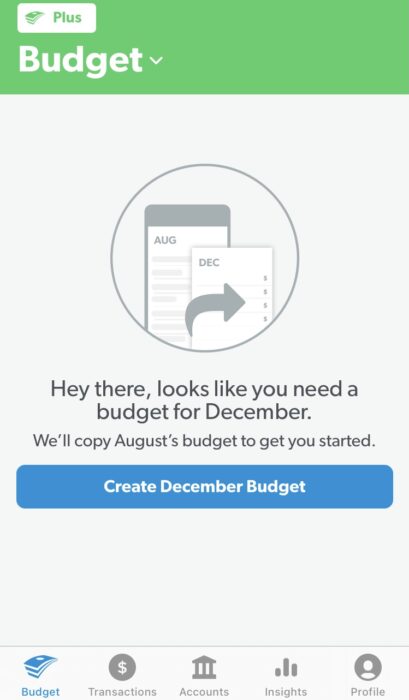
For a long time we were on a roll with our budget. Every Dollar’s free app was working well for us. We liked that we could each enter in our spending on our phones and easily collaborate on the budget. But somewhere in the middle of this crazy year we fell off the budgeting train big time. Like at this point I don’t even know where the train tracks are anymore.

I’ve just gone back to my previous habit of spending as little as possible and hoping for the best. So each month I’ve been determining the money that can go towards our debt purely from extra increase—income from side hustles, random rebate checks, etc. I’m not finding unused each month in our budget to put towards our debt. Not. Effective.

I think one deterrent with the app is I’m trying to be on my phone less, and I find entering things in on my iPhone to be tedious anyway.
Budget Help
The Every Dollar App judging me and my life choices

Going Old School with a Budget Spreadsheet

My gut feeling is that I’d do better using the computer. So I want to try a good old fashioned budget spreadsheet. I’m a sucker for a good spreadsheet and graphing program anyway. I like data entry (can you imagine how fun I am at parties?!), and I already track our debt payoff with charts in Numbers, the Mac version of Excel. I like that a spreadsheet is really customizable and that it’s secure and private.

But in the past years budget spreadsheets have failed me because:
– I don’t know how to set one up effectively
– I get lost on what I’ve entered in a category and what I haven’t

How to Make it Last?

So I throw this question out to the BAD community: how do you use a budget spreadsheet effectively?

I know there are tutorials out there on how to make a budget spreadsheet. But I need help knowing how to make it usable long-term.

  1. Do you enter your spending/payments daily?
  2. Do you keep track of each receipt and payment in a category? How do you know if you’ve entered something twice or haven’t entered one yet?
  3. We get paid (our main salary) twice a month. Would you still do a monthly budget?
  4. Would it be more effective to use Google Sheets (instead of Numbers on our desktop computer) so my husband and I could each access it online and edit it?

In a dream world, I’d also like to have one file with several spreadsheets: our budget, our debt payoff tracker, out investments, and even our net worth.

There are budget tasks I like to do by hand. I use a Bill Tracker from the Budget Mom that I like (I got it back when it was free). And the debt-tracking carts from Debt Free Charts are great too. But I’d like the math and budget help a spreadsheet can offer.

I’m feeling overwhelmed these days (these… months?), and I’d love to get whatever budget help you can offer!


2021 Financial Goals

by

2021 Financial Goals

I didn’t realize my last post on delaying my student loan payment until January would spark a debate on the anticipated student loan forgiveness promised by Biden. To be honest, that anticipated program has not even crossed my thoughts. If it’s offered, will I take advantage of it, yes. Am I planning on that? Not at all.

I am planning to pay off all my student loans. They are mine, I did take them out.

That being said, I have been working on my 2021 budget for months now. Being very thorough, setting realistic goals, and taking into consideration my 5-year plan. And then everything changed in the last month with this new job…

But my financial goals aren’t really changing…they are just being expedited.

Hands on a desk with a tablet and printed charts and graphs

2021 Financial Goals

Here are my overarching goals in priority order for 2021:

  1. Pay off smaller of my student loans in January 2021 as soon as I know the pay schedule and take-home pay. Anticipate this will happen on either January 15th or 30th, not sure when I will get my first new paycheck.
  2. Max out my ROTH IRA contributions from self-employment income – yes, that means, I plan to make at least $6,000 in profit in 2021 from my existing freelance business. At this point, my plan is to essentially turn off “pay” from my freelance business to myself in mid-January.  Then allow that income to just accumulate in my *new* interest-earning business account. My “business” expenses will continue to be paid from this account. And I will revisit every quarter/6 months to determine if there is a reason to pull “income” from it and put it toward something else. but for now, it will just maintain itself.
  3. Pay off my car – pre-new job, this would have taken all year and was my main and really only debt pay off goal for the new year. But with the new job, current projections indicate I will pay it off by August. Balance as of 1/1/2021 will be $14,931.76.
  4. Contribute some % of my new income towards a new 401K. My new company does not do matching, but they do profit-sharing, and I’m not sure how that works. But I do not qualify until I have 500 hours in. But I will begin contributing immediately to my new 401K, just not certain of the percentage yet at the time of this writing. I have done the math at 13%, 7%, and 3% and I could conservatively do any of those. I am leaning toward the 7% to start and then working my way up.
  5. Pay at least $307 every month towards my larger student loan, whether the new Cares Act extends the deferment or not. And once my car (#3) is paid off, those funds will go towards this loan. (Anticipating paying $800 every two weeks toward car loan beginning in February.)
  6. Add another $10,000 in my existing EF which equals out to $833 saved per month.
  7. Save $5,000 for a family trip…not planned, but dreaming, that would be $416 saved per month.
  8. Save $15,000 toward future housing, whatever that may be, that would be $1,250 saved per month.

I would love to pay off all debt in 2021, but I am also keenly aware that I need to balance my savings with my debt payoffs. So what do you think of my plan?