

by Sara S
Merry Christmas Eve.
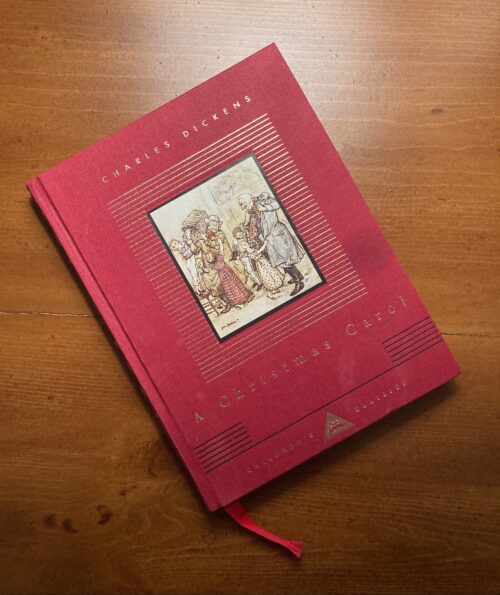
We have an annual tradition of reading or listening to Charles Dickens’s “A Christmas Carol.” As far as I knew as a kid, it was just a story starring Mickey Mouse and Scrooge McDuck. But as an adult I’ve become a big fan of the original story published in 1843. It’s well-written, short, and inspirational.
(We love the audiobook version read by Jim Dale. It’s so good. If you haven’t listened to anything he’s narrated, imma need you to go find some at the library. Stat.)
I didn’t know much about Dickens’s personal life or why he wrote this Christmas story until recently. What I learned was quite interesting: “A Christmas Carol” came about because of debt. And lots of it.
Dickens and Debt
Apparently debt was a familiar companion to Dickens and his family. He grew up poor. His father was sent to a debtors’ prison when Charles was 12, and Charles was left to support his family by working in a miserable factory. Their family was always struggling to make ends meet.
Even as he became a well-known writer, he still had a hard time managing money. He spent more than he made. He accrued his own debts, and became responsible for his father’s debts too.
By 1843, a few of his novels had flopped and his fourth child was on the way. Desperate, he wrote what he called “a Ghost Story of Christmas” in a quick six weeks. It was published on December 16, sold out by Christmas Eve, and has been a Christmas favorite ever since.
Money, Money, Money
If you know this Christmas classic, then you know money is a theme throughout. Scrooge loves it more than anything and anyone. He’s greedy, cheap, and selfish—the ultimate miser. He ignores the poor and rolls his eyes at any sort of joy. One Christmas Eve he’s shown his past, present, and future, and learns that he’s horribly off-target with his business-centric life. Mankind is his business. Charity, mercy, and kindness mean far more than his money.
“A Christmas Carol” saved Dickens that season, but unfortunately it didn’t solve all his money problems. He kept struggling to live within his means. He could have used a budget app. Dickens famously wrote about the misery of debt in his 1850 novel “David Copperfield”:
“Annual income twenty pounds, annual expenditure nineteen and six, result happiness. Annual income twenty pounds, annual expenditure twenty pounds ought and six, result misery.”
A Ghostly Reminder
Being in debt makes you think about money too much. You fear it, you hate it, you need it. There’s never enough. Your life becomes all about making money.
Bah! Humbug!
“A Christmas Carol” reminds me that focusing only on debt and money does no one any good. Debts keep you desperate and miserable. Greed freezes your heart. A balanced life brings peace, including financial peace.
In the preface to “A Christmas Carol” Dickens wrote:
“I have endeavored in this Ghostly little book to raise the Ghost of an Idea which shall not put my readers out of humor with themselves, with each other, with the season, or with me. May it haunt their house pleasantly and no one wish to lay it.”
May you be pleasantly haunted this holiday season.


