:::: MENU ::::

Posts tagged with: music lessons

The Psychology of Money

by

I just recently finished listening to an audiobook, The Psychology of Money: Timeless Lessons on Wealth, Greed, and Happiness by Morgan Housel.
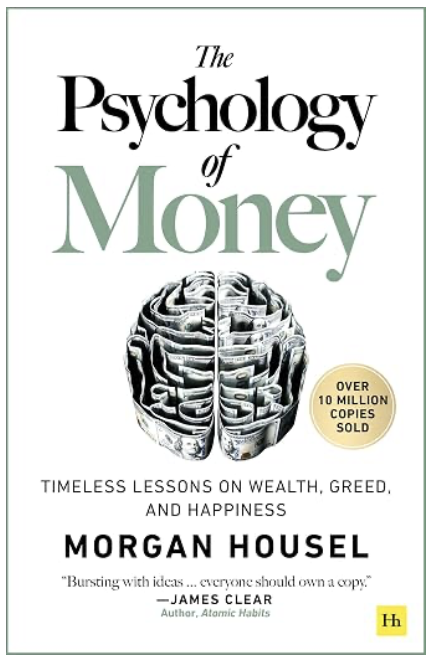
The Psychology of Money has great lessons about building wealth and learning the art of “enough.”

I have to be honest. I decided to check it out because I like the topics of Psychology and Money, but I didn’t think I’d get a lot out of the book. I figured I already know quite a bit about money and psychology (each separately), so I probably would already know everything that was written in the book.

That turned out to be so, so wrong.

There were so many great tidbits from the book that have stuck with me, and I want to share some of them with you.

Wealth is what you don’t see…and debt is, too

With debt, people might see a new car in the driveway, a fancy vacation with first-class airfare, and designer clothes, shoes, or handbags. What they don’t see is high credit card balances, HELOCs, or buy-now-pay-later plans with high interest rates and the sleepless nights that accompany all that stuff.

With wealth, people might see an old used car, modest vacations, and relative “homebodies” who eat at home and don’t have a lot of extravagance. What they don’t see is the growing 401K, investment account, and savings.

It’s easy to confuse debt for wealth. When we see a person with all the “stuff”: nice cars, nice clothes, nice trips, we think wealth. And for some that may be the case. But for many, the stuff is purchased with debt. It’s not wealth. It’s the exact opposite.

It’s easy to gain wealth, but harder to keep it.

This was one of the general principles of the book and although I beg to differ a bit on just how “easy” it is to gain wealth, I understand the sentiment behind it. Housel’s point is that to gain wealth, you just have to live below your means and save and invest consistently (especially in down market times) over a long period of time.

That’s it.

I remember from when I used to be a consistent listener to the Dave Ramsey show how Dave would talk about his studies of millionaires and one of the most consistent features is they lived below their means and always saved/invested. Most people don’t become wealthy through inheritance (though, yes, that happens). Most of the millionaire-next-door type of people do so by living frugally and squirreling away whatever extra they have over many, many years. It doesn’t matter their salary, their average rate of return, etc. It’s more about consistency across time.

In contrast, how do you stay wealthy? By not spending it. Period.

In his book, Housel talks about the psychological aspect of wealth. When people get money, their “lifestyle” tends to creep up. They buy a bigger house, or go on more lavish vacations or start treating themselves to extras because they feel they deserve it. All that is well and good. But if you spend your wealth, then it’s no longer wealth. It’s stuff. And most stuff depreciates in value across time.

Know when enough is enough

One of the most compelling parts of the book to me was a little anecdote of two friends chatting at a billionaire’s party. When one of the men pointed out that their host made more money in a single day than his friend had made from an entire best-selling novel, the author retorted, “maybe that’s true but I have something he’ll never have…enough.”

How many of us get caught up in the trap of wanting more and better all the time? The problem is, there will always be more. How much house is enough? There’s always bigger and better. How much car is enough? There’s always newer and faster.

How many of us can truly say we are satisfied with our life the way it is. That we have enough.

Recently I was chatting with some friends who are in the market for an RV. They were planning to get a specific brand but, when looking at them, they’re too small. So they decided they wanted a bigger RV. The problem is, that means they’ll need a bigger truck (their current truck isn’t big enough to pull the bigger RV). But they want to be able to park their cars in their garage and the bigger truck won’t fit in their garage – it’s too long by literally one inch (they measured). So now they need a new house with a bigger garage.

I *think* they were joking. But I mean…..????

I think we can all get trapped in that cycle sometimes. I find myself sometimes thinking about and longing for a different house. Even when we bought our home, I never fully loved it. I would have preferred a one-story or having the primary bedroom on the first level (it’s a two story home with the primary upstairs). I have absolutely thought about the idea of moving. But we got our house for a killer deal – it was a short-sale during the pandemic and the previous owners were just trying to off-load it as fast as they could. It’s because we have locked in such a great interest rate and relatively modest mortgage that we’re able to afford to cashflow the travel we enjoy. With rates and home prices as they are now, much more of our monthly income would be spent on housing. We don’t want to do that.

Maybe that’s the biggest lesson I took away from the book.

Personal finance isn’t just about math. It’s about psychology.

It’s about resisting the urge to compare your life to someone else’s highlight reel. It’s about recognizing that every “upgrade” has an ongoing cost. It’s about deciding what actually adds happiness to your life and what simply looks impressive from the outside.

The irony is that many of the habits that build wealth don’t look wealthy at all. Driving an older car or staying in the house that’s “good enough.” Packing lunches and saying no to things you could technically afford. Those choices rarely get likes on social media but they quietly create something much more valuable: freedom. Financial independence. And the ability to say yes to the things that truly matter.

I think of that often now, especially if I ever feel a tickling of wanting more or better. I have enough. That’s all you can really ask for from a financial perspective. And I’m very happy with the life we’ve built for ourselves.

I’m still looking for readers who I can spotlight in an upcoming series about paying off debt. If you’ve paid off a lot of debt and would like to share your story and strategies you used along the way, please leave a comment and I’ll reach out via email to chat!

How Much Of An Inheritance Should You Spend?

by

Talking with friends about money can be uncomfortable. But it can also be a great opportunity to learn from others.

I have a confession: I may have missed my calling in life. I think I could have really thrived as a business manager (or even an accountant or financial planner). I love numbers and budgets and spreadsheets and algorithms. I love thinking about and planning for the future – goal-setting, forecasting, etc. And I think I’m pretty good at it too (with much thanks to the readers here for helping me learn along the way).

And as much as I love thinking about money, I love talking about money too. It is my favorite. I had a little office water-cooler convo a few weeks ago talking about how I started a side-business and I employ my kids to do personal assistant tasks for me and what started as a 1-on-1 convo grew, when folks in neighboring offices heard and wanted to join the conversation. It ended with me talking to about 5 people about how I have an HSA that I plan to use as a stream of income in retirement. I’m maxing it out now, but I track and manage all health-related expenses on a spreadsheet, and invest the HSA funds so they continue to grow. Then when I retire, I can reimburse myself from these past medical expenses and get that money as income, 100% tax-free!

I ended with (jokingly) thanking everyone for coming to my TED talk. Many seemed interested – some more intrigued and others maybe more scared or stressed – but everyone wanted to know more!

Is it too late to switch careers and somehow build a career around doing speaking engagements or workshops where I help others get their finances in order? I can speak with a lot of authority, having come from 6-figures of debt and climbed my way out.

But I digress….

One of the people in this conversation is someone I’d consider a true friend (not “just” a colleague). She recently inherited a lot of money after her wealthy mother-in-law passed away and she’s struggling with what to do now. Not necessarily with the money…but with herself.

I had shared with her previously that we had inherited some money so she knew I had a similar experience. And she asked me, “how do you not spend it all on fun stuff?!” To her, I think “fun stuff” is clothes, shoes, and bags. 

In fact, she actually bought a million dollar home (planning to upgrade from their current middle-class home), and once they closed she felt extreme buyer’s remorse. They ended up doing some updates (painting, stucco work, new shutters), and re-listed the house. They never moved in. They were able to get above asking price, which is fantastic, but my guess (I never asked) is that the venture cost them money given realtor’s commissions, taxes and fees, and the amount they put into updates. She jokes it was her “million dollar house flip” but I think she learned some valuable lessons. Buying a new house won’t make you happier. If you’re using money to chase happiness, you’ll never achieve it.

But back to her question about how do I not spend our inheritance on fun stuff. And the truth is, I have a hard time answering it because I’m just not built that way. I never even considered splurging on a brand new car or a fancy designer handbag. I love to travel, but we pay for our trips out of our regular income (not inheritance money). We live below our means. That’s how I was raised and it just comes naturally to me.

But I know I am NOT the norm. I am the weird one. MOST Americans live above their means. MOST Americans are living paycheck-to-paycheck and are saddled with debt. It’s hard to give advice, though, when I don’t have that same perspective.

This is what I think about what to do with an inheritance:

  1. Pay off debt – that’s literally my #1 thing. Any and all consumer debt – get rid of it.
  2. Buy something “fun” that’s a small proportion of the inheritance. The exact percentage would likely vary based on the amount of inheritance. If you inherit $10k, then maybe no more than $1k (10%). But if you inherit $100k, maybe no more than $5k (only 5%). I’m not as hung up on the exact percentage as I am on the fact that the “fun” spending should be a small proportion of the inheritance.
  3. Save and invest the rest.

I struggled with Step 3, because I also thought about charitable donations and giving. But like our planned travel, we have charitable giving built into our monthly budget. When we inherited money, I didn’t go out and drop an extra check to charity at that moment in time because we do that anyway. But having an extra influx of cash can certainly help if you’re wanting to be charitable at a higher level.

What do you think?

When we inherited money, we were already consumer debt-free. I still had my student loans, but I didn’t pay them off since I knew they’d soon be forgiven through PSLF. And although we did spend a bit of money, I think it’s debatable as to whether you’d consider it a “fun” splurge or a necessary one. We enclosed our formal living room at the front of our house to make it into a dedicated office.

For the six years we’ve been in our home, I’ve worked mostly at home and have always been shoved in a tiny corner of our guest bedroom. That means I’m displaced anytime we have guests. It also wasn’t the prettiest view (the guest bedroom looks out over our trash cans and our neighbor’s house).

Having a dedicated office is truly the best! I now look out over the front yard (my view is of pretty trees, birds, dog-walkers, children playing, etc.) and I never have to be displaced when people come to visit! It cost us a few thousand dollars to put up walls and add electrical, but we otherwise didn’t need to change anything structurally and it works perfectly for us. I think what it’s done is allow us to stay in our home for longer than we might have otherwise because now it better meets our needs. 

That was our inheritance “splurge.” A home office. Best money ever spent.

home office
Inheriting money can lead to many questions. How much should you spend versus save? Can you afford a splurge? And how do you avoid letting a sudden windfall change your financial priorities?

The rest of the inheritance is all invested. I have to deal with required minimum distributions from IRAs, but I pull the money out and re-invest immediately. I do not view it as additional income in our monthly budget. I don’t even think about it. It’s more fuel for my FIRE dreams of retiring at 50.

So what would you say to a friend who has asked a similar question after an inheritance (i.e., “How do you not spend it all on fun stuff?”)? I just don’t value those things so it’s never been an issue for me. But I’d love to know what you all think!

If you were to inherit a good sum of money, what would you do with it? How much do you think is “fair” to be spent on something fun and splurgy versus how much would you want to save and invest?

Speaking of talking about money, I would like to do a series where I interview people who have paid off a lot of debt and talk about the strategies, sacrifices, etc along the way. If you are interested in being interviewed and featured on the blog, please post a comment so I can reach out to you directly.

1 2 3 2,029