by Ashley
Thank you for all the nice comments and messages on my recent post. A couple of recent unexpected medical bills have reminded me how much life has changed. Not because the bills were catastrophic. But because there was a time in my life when they absolutely would have been.
Bill #1: Dental Care
My daughter recently had cosmetic dental work done for peg lateral incisors (small side teeth that can look pointed and undersized). She’s been self-conscious about them for awhile and finally asked if there was anything that could be done.
The dentist added composite to reshape them and they look fantastic! She’s happier, more confident, and willing to smile now with her teeth!
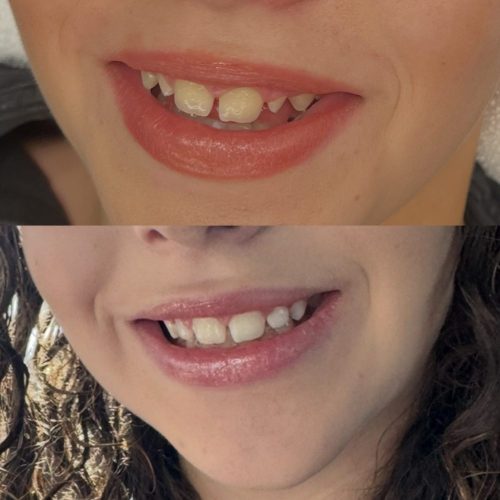
The problem is that our dentist indicated that the majority of the cost could be covered by insurance. That turned out to be incorrect. After our claim was denied, I ended up footing the bill. To the tune of $215.
Bill #2: Mammogram
Unexpected bill #2 had to do with routine health screening I undergo. Because I have dense breast tissue and a family history of breast cancer, I have bi-annual mammograms and annual breast ultrasounds. For my most recent mammogram, I was already driving en route to the appointment when I received a call from the office.
The woman on the phone sounded genuinely uncomfortable and apologetic, calling to let me know that due to my high deductible health insurance plan, I would need to pay $250 out of pocket to receive my services. She kept apologizing for the late notice and even asked if I still wanted to keep the appointment or if I needed to cancel and reschedule given the unanticipated cost. She said something like, “I know if it were me, I wouldn’t be able to just pay an unexpected $250 bill out of nowhere.”
All I could think was, “Wow!”
Not because $250 is nothing. It’s still a lot of money. But because there was a time in my life where that phone call would have caused actual panic. When I likely WOULD have had to reschedule the appointment, or skip it entirely.
Medical bills from the past
When I was in graduate school, I distinctly remember one such example. I got really sick and even though I don’t remember now what I was diagnosed with (sinus infection? some sort of viral infection?), I remember feeling miserable and finally dragging myself to the doctor.
My student insurance at the time covered the cost of the office visit, but the student health plan had no coverage for prescription medications. I still remember standing at the pharmacy counter and hearing the price of the medication. I don’t remember the exact amount now, but I’ll never forget the feeling in my stomach when they told me.
I couldn’t afford it.
Not “I’d rather not spend that much.” Actually I couldn’t afford it. So I declined the prescription and went home sick because getting better literally cost more money than I had available.
That memory has stuck with me forever (and why did I not think I could call my mom to ask for help? I don’t know. But I know for a fact I walked away WITHOUT the prescription in hand).
Gratitude
So now, when these unexpected medical expenses popped up, I feel grateful in a way that’s hard to explain unless you’ve lived both versions of life.
There was the grad school version – where I had to remain sick longer than necessary (or maybe just feel worse than necessary) because I couldn’t afford the medication prescribed.
And now the current version – where I have to move a little money from budget category “A” to budget category “B” to cover the unexpected expenses, but the bills are just a minor annoyance. Totally manageable.
Savings don’t just buy “stuff.” Savings can help buy peace of mind. It’s the difference in the ability to say “yes” to a mammogram without hesitation. Or “yes” to helping my daughter feel more confident in her smile.
I’m grateful for that former life I’ve lived, because it built character and helped shape who I am. But I’m beyond grateful to be in my current life where a couple of unanticipated medical bills don’t derail our entire month financially.
That kind of security is something I will never take for granted.
Have you ever declined recommended medical care due to the cost?
Hi, I’m Ashley! Arizonan on paper, Texan at heart. Lover of running, blogging, and all things cheeeeese. Early 40s, married mother of twins, and working in academia. Currently working toward financial independence with the goal of (hopefully!) retiring early at 50.