

by Ashley
Thanks for all the comments and tips on my last post about our upcoming trip to Washington DC and NYC! I’ve compiled all the suggestions and plan to use many when we travel! I realized I hadn’t mentioned a timeframe – we won’t be going until the Spring. Hopefully by then the government shutdown will be resolved! Thanks again to everyone who reached out and left a comment!
Today, I wanted to talk about budgeting for home improvement projects.
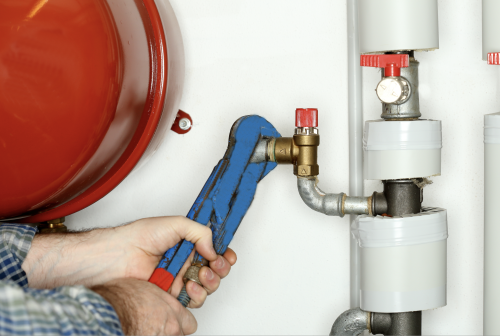
Since moving into our house just over 5 years ago, we’ve made it a goal to do one or two small projects each year (usually $2,000 or less). Past projects include adding astroturf to our backyard, installing solar screens to help with electricity (and protect us from the Arizona heat!), and replacing our too-small water heater with a tankless option. These were done gradually across time, and usually paid for with a “third paycheck” month, so the cost didn’t disrupt our regular budget.
That system has worked well, but lately I’ve been wondering whether we should intentionally set money aside for these projects each year. We already have a house “emergency fund” for major issues like an HVAC replacement or roof repair, but I see that as separate from smaller planned upgrades.
One part of me thinks – “If it ain’t broke, don’t fix it!” Why complicate something thats working?
The other part of me thinks – “What if we want to take on something bigger that isn’t an emergency?” The thing that comes to mind is replacing our downstairs flooring. Currently it’s a mix of tile and carpet and both are in pretty rough shape. We have several cracked tiles (from the home settling) and the carpet is pretty beat up from dogs and kids. I’m not rushing out to make any flooring changes right away (frankly, the price tag scares me!), but it’s something I think about – especially if we plan to stay here another 5 years (which is our current plan).
When I did some googling, I learned there’s no “one” answer for how much people spend on home improvement annually. This one article suggests the average is about $9,000 per year. Then I googled what Dave Ramsey says. I’m not a 100% Ramsey-follower, but his debt aversive thought process appeals to me. According to Ramsey, no more than 25% of your budget should go toward household expenses, including mortgage, property taxes, insurance, and any home improvements or upgrades, combined. Using that as a guide, we have some room to start saving for future projects, if we want.
So now I’m curious – what do you do?
Do you plan and budget for home improvements that occur regularly across time? Do you live with things as-is and then tackle everything before selling? With my first home, we did almost nothing until the end, when we spent thousands fixing it up for sale. It would have been nice to enjoy some of those upgrades while we still lived there!
With house (and husband) #2, we’ve taken a slower, more intentional approach. We make small improvements we can all enjoy now. Replacing the water heater, for example, made a huge difference in our daily lives! No longer racing to be first to shower so the heat didn’t run out? Priceless! You mean we can shower AND run the dishwasher AND a load of laundry at the same time? Amazing! It’s been worth every penny and I’m glad we did it when we did so we can actually enjoy the benefit!
For homeowners looking for guidance on which projects provide the best return on investment, working with experienced local professionals, like Earnest, can help plan upgrades that are both practical and value-boosting.
So please chime in – how does your family handle home improvements? Do you budget and plan across time, wait until selling, or fix things just as problems arise? I’d love to hear how others approach this!


Hi, I’m Ashley! Arizonan on paper, Texan at heart. Lover of running, blogging, and all things cheeeeese. Early 40s, married mother of twins, and working in academia. Currently working toward financial independence with the goal of (hopefully!) retiring early at 50.


Well the Dave Ramsey thing kinda doesn’t make sense to me. Why? Because what if you are already putting 25% of your income into your mortgage, insurance etc. That would have no effect on how much you’ll need for repairs and upgrades. It might mean you have a zero budget for all that stuff, but it will still need to be done. Likewise if you are only spending 15% of your income on mortgage/taxes etc that doesn’t mean you need to start spending 10% more for upgrades. Seems like a better approach would be to try to make an estimate for major repairs, upgrades etc that you want to do over time and when you’d like to do each one. Then, put in a budget amount each month to get you there. Some things you won’t exactly know but you can estimate. For example you may need a new roof in 6 years or maybe in 10 years. But try to guess somewhere in the middle and start budgeting for it.
I’m not sure if this is direct from Ramsey himself- the “complete” reco I typically see when it comes to housing cost is to figure 1-3% of the house’s value as an annual sinking fund for maintenance, then you would fit that into the 25% (or whatever budget) allotted to total housing expense.
I don’t budget ahead of time – but I have alway just spent frugally all the time, and really don’t buy thing I don’t need and I pay off credit cards every month, so never have credit card debt. I save whatever I don’t spend, and as it adds up in a 4% savings account, I eventually invest it and/or spend it on a home improvement or repair. For instance, I just had an unexpected boiler repair that costs $1,200 and I was able to just pay from my savings because I usually leave $4-5K in the 4% account. I an recently retired and have plenty of money invested and I also have a HELOC in case I need instant access to more cash than I have on hand (this is they way I handled stuff all through my adult life) . For instance, if I needed an unexpected major repair which had to one paid immediately that I could not put on a charge card, I would just borrow from the HELOC until I could liquidize appropriately from my investments.
Yeah, I’m sort of the same way, as I don’t really see the value of creating a budget. Just be as thrifty as you can whenever you can and pay things as you need. I think budgets may be better for people who are spending more than they make every month. Then, at least they can look back and see what buckets are draining them.
We have a home emergency fund for small fixes, but the big projects are funded at the beginning of the year that the project will happen. It’s nice to know we have the money set aside and then can enjoy finding good bargains on project supplies.
We have learned to budget an extra 20% for unknowns – every project has them! If we end up not needing the full 20% we use it to fund the next big project.
It’s such a great idea to plan for the unexpected!