by Hope
I’ve been on a CASH ONLY basis since I took the Dave Ramsey course this past spring. It just made sense to me in a way few things have. And I dove right in.
Current Circumstances
Now just a reminder of or introduction to my current life for those that haven’t been here that long. I live with my dad. I moved in here about a year and a half ago to help take care of my mom (and dad). My mom passed away in June of this year.
My dad lets me stay here for free and pays for all the groceries. I do not pay any rent or utilities. In exchange, I do all the cooking and general care of the home. I’m also now taking over bill paying for him with financial oversight by my siblings. It’s not a job I asked for or wanted, but it makes the most sense since I am here.
My dad has pointed out several times that since I moved in, he is spending less on food. And he’s definitely eating more variety and more healthy. (He is also a diabetic so our diets are structured identically in that sense.) So it’s actually been saving him money to have me around. He can’t cook. And has no desire to learn.
All that to say, my monthly bills are very low. My car is paid for. A single student loan is my only outstanding debt. And while I still pay my cell phone, internet, and support my dogs, most of the income I bring is goes to savings these days. Thank god!
Taking a class at my church is really the only time I leave my house every week. I have a dinner with a group of women every other week, but other than that, I am perfectly content to be home.
How Cash has Helped
Last spring, I took the Financial Peace class. And while I’ve know about the Baby Steps forever. I had never heard him speak. It made so much sense to me.
Here are my top three take aways since going cash only:
- Carrying cash is not something I do. I’ve never been one to carry cash. And that hasn’t changed. Makes it really hard to buy anything when you literally have no way. I know this is extreme, but it’s what I do. And we all know I need the discipline. (I do use my debit card for gas at the pump, but 1) it’s in my budget and 2) since I rarely go anywhere on a regular basis, I don’t have to get gas often.)
- Preparation is key. Food has always been a weakness. The convenience of restaurants, drive thrus, just made my money disappear. That was especially true when all 5 of my kids were home. So when I know I’m going to be away from home. I pack food. And it’s really helped getting to cook and keep groceries I enjoy. And being Texas, it is HOT! So I always have my water bottle or two with me. And even carry one for the dogs. Even dog sitting I take my meals.
- There is power in big bills. When I do have cash. Which is still very rare. I try to keep it in big bills. There’s something about breaking a big bill that makes me think and rethink if I really need whatever it is I’m tempted to buy. And 9 times out of 10, I choose not to make the purchase rather than break a big bill.
I know these are silly. But for the last 6-ish months, I’ve saved more than ever, more quickly than ever, and without feeling like I’m depriving myself at all. And that is a win for me. I have the most money for the longest time in a savings account that I think I’ve ever had. (I don’t think I said that well, but I hope you understand what I’m saying.)
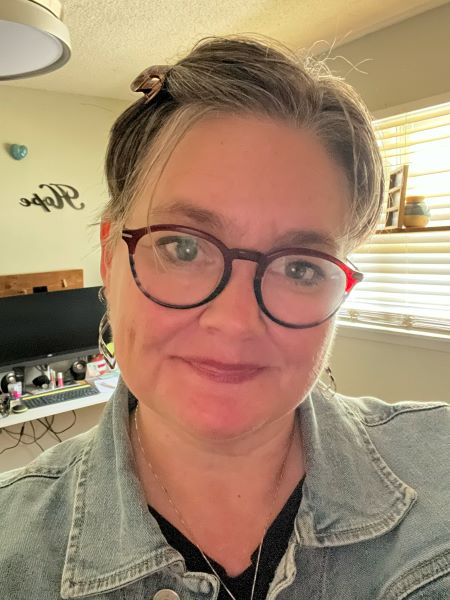
Hope is a resourceful, solutions-driven online business manager with over two decades of experience helping clients streamline operations, manage projects, and grow their businesses through digital marketing and technology.
But life has a way of rewriting your plans.
A year ago, Hope made the decision to move in with her aging parents full time – a season she wouldn’t trade, even as it came with its own financial and emotional weight. Earlier this year, she lost her mother, and is now walking the tender, disorienting path of grief while learning what “forward” looks like from here.
Hope came to the Blogging Away Debt community in 2015 as a single mom raising five foster and adoptive children. She’s written through job changes, financial setbacks, and the bittersweet transition to an empty nest. Her kids are finding their footing in the world now – and so is she.
Rooted in faith and fueled by the same perseverance she’s brought to every hard season, Hope is ready to face her finances with fresh eyes and an honest pen. She believes that clarity, courage, and community can change the trajectory of anyone’s story including her own.
She lives in Austin, TX with her dad, loves adventures with her dog Addie, and is figuring out, one step at a time, what this next chapter is meant to be.