:::: MENU ::::

Posts tagged with: lower interest

How I’ve Improved my Contract Work Application Process

by

It’s been 20 years, almost to the day, since I left the corporate world. And while I’ve forayed back into it a couple of brief stints, freelancing and contract work has paid my bills for most of the last two decades.

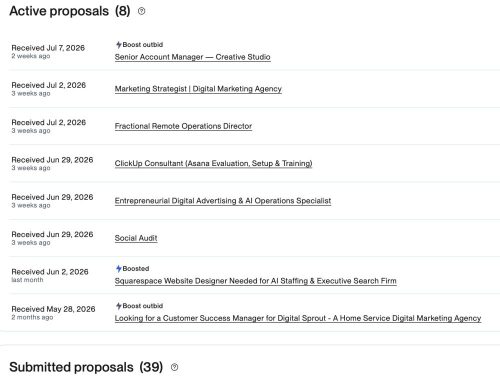
Since mom died, I am back at job seeking full time. And I’m averaging 2-3 interviews per week, and have picked up 3 new contracts over the last couple of weeks. Yeah! I’m also actively seeking full time roles in Austin and Atlanta.
screenshot of Hope's job applications
Upwork application status for the last month


Overall, my hunt has been much more successful, much more quickly then in years past. And I think the work I did on my 3 week journey really made a difference. So what am I doing differently?

Tips for Growing Your Contract Business

(from someone who has failed as many or more times than I’ve succeeded)

    1. Specialize  – Specializing as a contractor just makes you easier to hire. When you’re the “kitchen remodel guy” instead of “does everything,” or in my case an “online business manager” instead of a “jill of all trades” people searching for that exact job find you faster and trust you more, so there’s less back and forth proving you’re capable. It also makes referrals way easier since past clients can describe exactly what you do instead of a vague “he’s pretty handy.” And once you build a name in a niche, you can usually charge more and get more repeat work than someone spreading themselves thin across every kind of job.
    2. Set a standard – Setting clear standards for what work you’ll take on saves you from a ton of headaches down the line. If you don’t know your own boundaries going in, you end up saying yes to stuff that drains you or pays less than it’s worth. And it’s way harder to walk it back later. For me that’s meant setting a firm hourly rate I don’t budge on, only applying to projects that are mostly behind the scenes with maybe 15% or less phone time, and sticking to the specific skillsets. In the past, I’ve tended to stretch for anything that comes my way. Having those lines drawn ahead of time makes it so much easier to know what to say yes to and what to skip, without second guessing every opportunity that lands in your inbox.
    3. Do the research & write the cover letter – Doing your homework before you apply makes a real difference, even when you’re working with limited info. Since I usually can’t see much about the client beyond the listing itself, I try to squeeze every clue I can out of the project description, tone, specific phrasing, what they emphasize, what they leave out. Then I match that same tone in my proposal instead of defaulting to one generic pitch I copy and paste everywhere. I make sure to respond explicitly to what they said they want and need, point by point, while weaving in my own experience so it’s obvious why I’m a good fit rather than just claiming I am.

I’ve also been booked solid with dog and house sitting jobs. In fact, I’m on a 16 day job as I write this, which will end 2 days before I leave for Georgia. More on that trip later…

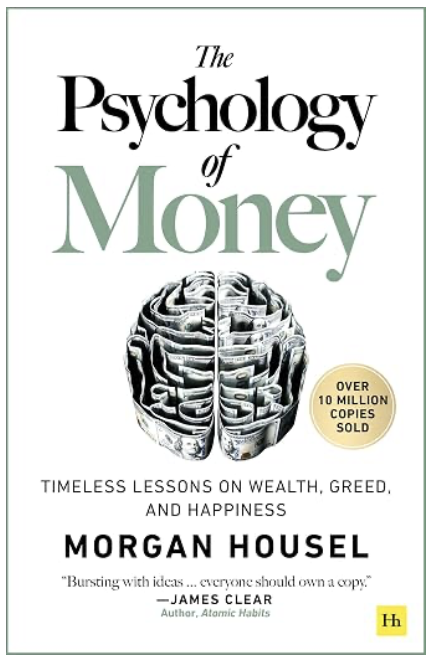
The Psychology of Money

by

I just recently finished listening to an audiobook, The Psychology of Money: Timeless Lessons on Wealth, Greed, and Happiness by Morgan Housel.

The Psychology of Money has great lessons about building wealth and learning the art of “enough.”

I have to be honest. I decided to check it out because I like the topics of Psychology and Money, but I didn’t think I’d get a lot out of the book. I figured I already know quite a bit about money and psychology (each separately), so I probably would already know everything that was written in the book.

That turned out to be so, so wrong.

There were so many great tidbits from the book that have stuck with me, and I want to share some of them with you.

Wealth is what you don’t see…and debt is, too

With debt, people might see a new car in the driveway, a fancy vacation with first-class airfare, and designer clothes, shoes, or handbags. What they don’t see is high credit card balances, HELOCs, or buy-now-pay-later plans with high interest rates and the sleepless nights that accompany all that stuff.

With wealth, people might see an old used car, modest vacations, and relative “homebodies” who eat at home and don’t have a lot of extravagance. What they don’t see is the growing 401K, investment account, and savings.

It’s easy to confuse debt for wealth. When we see a person with all the “stuff”: nice cars, nice clothes, nice trips, we think wealth. And for some that may be the case. But for many, the stuff is purchased with debt. It’s not wealth. It’s the exact opposite.

It’s easy to gain wealth, but harder to keep it.

This was one of the general principles of the book and although I beg to differ a bit on just how “easy” it is to gain wealth, I understand the sentiment behind it. Housel’s point is that to gain wealth, you just have to live below your means and save and invest consistently (especially in down market times) over a long period of time.

That’s it.

I remember from when I used to be a consistent listener to the Dave Ramsey show how Dave would talk about his studies of millionaires and one of the most consistent features is they lived below their means and always saved/invested. Most people don’t become wealthy through inheritance (though, yes, that happens). Most of the millionaire-next-door type of people do so by living frugally and squirreling away whatever extra they have over many, many years. It doesn’t matter their salary, their average rate of return, etc. It’s more about consistency across time.

In contrast, how do you stay wealthy? By not spending it. Period.

In his book, Housel talks about the psychological aspect of wealth. When people get money, their “lifestyle” tends to creep up. They buy a bigger house, or go on more lavish vacations or start treating themselves to extras because they feel they deserve it. All that is well and good. But if you spend your wealth, then it’s no longer wealth. It’s stuff. And most stuff depreciates in value across time.

Know when enough is enough

One of the most compelling parts of the book to me was a little anecdote of two friends chatting at a billionaire’s party. When one of the men pointed out that their host made more money in a single day than his friend had made from an entire best-selling novel, the author retorted, “maybe that’s true but I have something he’ll never have…enough.”

How many of us get caught up in the trap of wanting more and better all the time? The problem is, there will always be more. How much house is enough? There’s always bigger and better. How much car is enough? There’s always newer and faster.

How many of us can truly say we are satisfied with our life the way it is. That we have enough.

Recently I was chatting with some friends who are in the market for an RV. They were planning to get a specific brand but, when looking at them, they’re too small. So they decided they wanted a bigger RV. The problem is, that means they’ll need a bigger truck (their current truck isn’t big enough to pull the bigger RV). But they want to be able to park their cars in their garage and the bigger truck won’t fit in their garage – it’s too long by literally one inch (they measured). So now they need a new house with a bigger garage.

I *think* they were joking. But I mean…..????

I think we can all get trapped in that cycle sometimes. I find myself sometimes thinking about and longing for a different house. Even when we bought our home, I never fully loved it. I would have preferred a one-story or having the primary bedroom on the first level (it’s a two story home with the primary upstairs). I have absolutely thought about the idea of moving. But we got our house for a killer deal – it was a short-sale during the pandemic and the previous owners were just trying to off-load it as fast as they could. It’s because we have locked in such a great interest rate and relatively modest mortgage that we’re able to afford to cashflow the travel we enjoy. With rates and home prices as they are now, much more of our monthly income would be spent on housing. We don’t want to do that.

Maybe that’s the biggest lesson I took away from the book.

Personal finance isn’t just about math. It’s about psychology.

It’s about resisting the urge to compare your life to someone else’s highlight reel. It’s about recognizing that every “upgrade” has an ongoing cost. It’s about deciding what actually adds happiness to your life and what simply looks impressive from the outside.

The irony is that many of the habits that build wealth don’t look wealthy at all. Driving an older car or staying in the house that’s “good enough.” Packing lunches and saying no to things you could technically afford. Those choices rarely get likes on social media but they quietly create something much more valuable: freedom. Financial independence. And the ability to say yes to the things that truly matter.

I think of that often now, especially if I ever feel a tickling of wanting more or better. I have enough. That’s all you can really ask for from a financial perspective. And I’m very happy with the life we’ve built for ourselves.

I’m still looking for readers who I can spotlight in an upcoming series about paying off debt. If you’ve paid off a lot of debt and would like to share your story and strategies you used along the way, please leave a comment and I’ll reach out via email to chat!

1 2 3 2,030