

by Hope
It’s been 20 years, almost to the day, since I left the corporate world. And while I’ve forayed back into it a couple of brief stints, freelancing and contract work has paid my bills for most of the last two decades.
Since mom died, I am back at job seeking full time. And I’m averaging 2-3 interviews per week, and have picked up 3 new contracts over the last couple of weeks. Yeah! I’m also actively seeking full time roles in Austin and Atlanta.
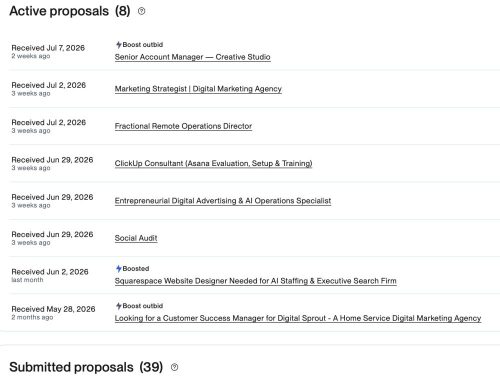
Overall, my hunt has been much more successful, much more quickly then in years past. And I think the work I did on my 3 week journey really made a difference. So what am I doing differently?
Tips for Growing Your Contract Business
(from someone who has failed as many or more times than I’ve succeeded)
- Specialize – Specializing as a contractor just makes you easier to hire. When you’re the “kitchen remodel guy” instead of “does everything,” or in my case an “online business manager” instead of a “jill of all trades” people searching for that exact job find you faster and trust you more, so there’s less back and forth proving you’re capable. It also makes referrals way easier since past clients can describe exactly what you do instead of a vague “he’s pretty handy.” And once you build a name in a niche, you can usually charge more and get more repeat work than someone spreading themselves thin across every kind of job.
- Set a standard – Setting clear standards for what work you’ll take on saves you from a ton of headaches down the line. If you don’t know your own boundaries going in, you end up saying yes to stuff that drains you or pays less than it’s worth. And it’s way harder to walk it back later. For me that’s meant setting a firm hourly rate I don’t budge on, only applying to projects that are mostly behind the scenes with maybe 15% or less phone time, and sticking to the specific skillsets. In the past, I’ve tended to stretch for anything that comes my way. Having those lines drawn ahead of time makes it so much easier to know what to say yes to and what to skip, without second guessing every opportunity that lands in your inbox.
- Do the research & write the cover letter – Doing your homework before you apply makes a real difference, even when you’re working with limited info. Since I usually can’t see much about the client beyond the listing itself, I try to squeeze every clue I can out of the project description, tone, specific phrasing, what they emphasize, what they leave out. Then I match that same tone in my proposal instead of defaulting to one generic pitch I copy and paste everywhere. I make sure to respond explicitly to what they said they want and need, point by point, while weaving in my own experience so it’s obvious why I’m a good fit rather than just claiming I am.
I’ve also been booked solid with dog and house sitting jobs. In fact, I’m on a 16 day job as I write this, which will end 2 days before I leave for Georgia. More on that trip later…

Hope is a resourceful, solutions-driven online business manager with over two decades of experience helping clients streamline operations, manage projects, and grow their businesses through digital marketing and technology.
But life has a way of rewriting your plans.
A year ago, Hope made the decision to move in with her aging parents full time – a season she wouldn’t trade, even as it came with its own financial and emotional weight. Earlier this year, she lost her mother, and is now walking the tender, disorienting path of grief while learning what “forward” looks like from here.
Hope came to the Blogging Away Debt community in 2015 as a single mom raising five foster and adoptive children. She’s written through job changes, financial setbacks, and the bittersweet transition to an empty nest. Her kids are finding their footing in the world now – and so is she.
Rooted in faith and fueled by the same perseverance she’s brought to every hard season, Hope is ready to face her finances with fresh eyes and an honest pen. She believes that clarity, courage, and community can change the trajectory of anyone’s story including her own.
She lives in Austin, TX with her dad, loves adventures with her dog Addie, and is figuring out, one step at a time, what this next chapter is meant to be.


Any chance that you’re going to approve comments on your previous post before creating new posts?
Depends if she can get AI to write the answers. AI wrote this post not to mention her new cringe biol.
Nah, she’s busy paddle boarding to Georgia without a health insurance policy in sight.
Her post is all “A” without the “I.”