by Hope
Never thought I would use those two words in the same sentence: filing taxes and scrapbooking. While we were in a waiting game for my brother’s autopsy to be complete, his body to be released, and the service to be planned, I needed something to occupy my time. Sitting in a hotel room. Couldn’t concentrate on too much those first few days.
Too many questions. Too many tears.
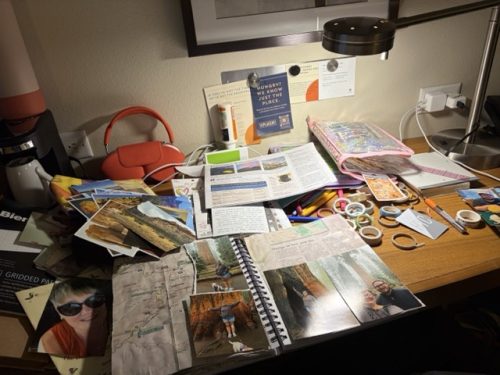
Thankfully, I had planned for lots of downtime on this trip. Dad was to be visiting friends and family. And I’d be waiting. So I brought two things along to occupy my time outside of work hours and dog walks. I brought all the tax docs to complete filing his back taxes.
And I brought a bag full of scrapbooking supplies to document my trip to Branson, Vegas, California, and back to Texas this past April and May. What you see pictured is what I had with me. A few pens, some washi tape, and so paper glue, along with some sticker sets (in the pink plastic thing under the light).
I’ve begun junk journaling this year. Essentially keeping scraps of wherever I go – ticket stubs, paper bags with logos on it, pamphlets you pick up for free. And, of course, I always take pics with my phone. Walmart+ gets me 20 free prints a month, so I print the pics in batches. FREE.
Eating peanut butter sandwiches, string cheese, snacks that I packed. A few meals with old friends. Several dog walks a day around the hotel. I’ve not left my hotel room unless required.
I couldn’t focus on the taxes, so I’ve just filled out the form basics. When my eyes stay dry a little bit longer. And I get a bit more distance from this. I’ll go back to those.
Now more than ever…I am grateful for my scrapbooks and all my pics.
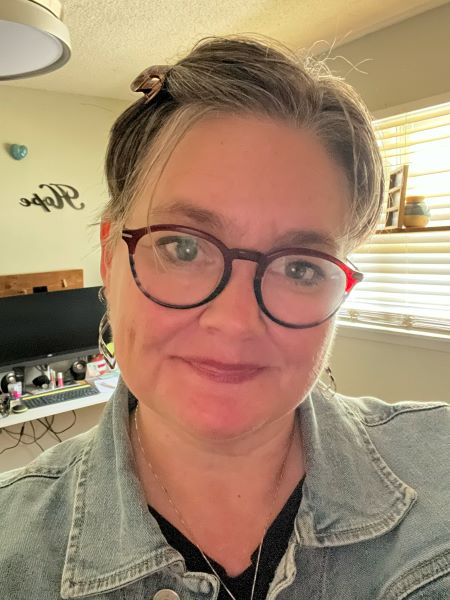
Hope is a resourceful, solutions-driven online business manager with over two decades of experience helping clients streamline operations, manage projects, and grow their businesses through digital marketing and technology.
But life has a way of rewriting your plans.
A year ago, Hope made the decision to move in with her aging parents full time – a season she wouldn’t trade, even as it came with its own financial and emotional weight. Earlier this year, she lost her mother, and is now walking the tender, disorienting path of grief while learning what “forward” looks like from here.
Hope came to the Blogging Away Debt community in 2015 as a single mom raising five foster and adoptive children. She’s written through job changes, financial setbacks, and the bittersweet transition to an empty nest. Her kids are finding their footing in the world now – and so is she.
Rooted in faith and fueled by the same perseverance she’s brought to every hard season, Hope is ready to face her finances with fresh eyes and an honest pen. She believes that clarity, courage, and community can change the trajectory of anyone’s story including her own.
She lives in Austin, TX with her dad, loves adventures with her dog Addie, and is figuring out, one step at a time, what this next chapter is meant to be.