

by Hope
I can’t remember if I shared that I signed up for Dave Ramsey’s Financial Peace University at my church last fall. It cost $25. I remember when Beks wrote about it many years ago, but really never thought it was for me.

Of course, after 10+ years blogging here, I’ve learned more about it. Gotten pretty familiar with the construct of “baby steps“, at least 1 and 2. Now I’m taking the 9 week course.
It’s in person, 2 hours a week, with homework, small group support, and a year’s subscription to their app EveryDollar.
As of writing this, we are on week 2. There are over 200 people taking it with me. I don’t know a single one of them. Last week was all about creating a zero based budget. This week was about the Debt Snowball Method. I am learning so much.
Two Major Concepts
In reality, the concepts aren’t really new to me, I guess, but hearing them taught this way is really making an impact.
There are two things I am really thinking through right now…
- Proverbs is full of financial guidance. What? How come I’d never heard that before. And I’ve been reading Proverbs for years. Just never looked at it that way.
- Can I live without credit cards? Cash only.
No More Credit Cards
Last night, they had a “plas-ectomy” (sp?) where they invited people to come up on stage and cut up credit cards. Boy, that’s scary to me.
For the longest, I’ve leaned on my credit cards: 1) to carry me through when I had low income; and now 2) as kind of an emergency back up/what if?
But I’m really thinking about it. It would be a HUGE leap of faith for me. Maybe not faith, but big mindset shift. Whatever you want to call it.
Last summer, I closed alot of my accounts. But I still have 4 open. And in Dave Ramsey’s video at class last night, he addressed all my reasoning…security, rewards/points, etc.
Can I do this? Can I close all my accounts and go cash only?
Proverbs as a Finance Lesson
As I teeter on the edge of this BIG move. I’ve decided I’m going to read through Proverbs, one chapter at a time again. And each day, I’m going to write down all the “finance” lessons or guidance I find in that chapter.
I’ve always read Proverbs as a book of contracts, not financial guidance. Let’s see what looking at it from a new perspective gives me.
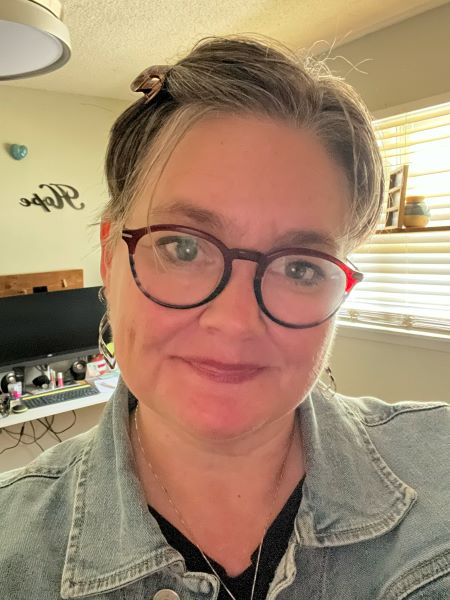
Hope is a resourceful and solutions-driven business manager who has spent nearly two decades helping clients streamline their operations and grow their businesses through project management, digital marketing, and tech expertise. Recently transitioning from her role as a single mom of five foster/adoptive children to an empty nester, Hope is navigating the emotional and practical challenges of redefining her life while maintaining her determination to regain financial control and eliminate debt.
Living in a cozy small town in northeast Georgia with her three dogs, Hope cherishes the serenity of the mountains over the bustle of the beach. Though her kids are now finding their footing in the world—pursuing education, careers, and independence—she remains deeply committed to supporting them in this next chapter, even as she faces the bittersweet tug of letting go.
Since joining the Blogging Away Debt community in 2015, Hope has candidly shared her journey of financial ups and downs. Now, with a renewed focus and a clear path ahead, she’s ready to tackle her finances with the same passion and perseverance that she’s brought to her life and career. Through her writing, she continues to inspire others to confront their own financial challenges and strive for a brighter future.


If you can’t force yourself to cut them up, put them in the freezer and try living on cash for a couple months and see how it goes.
Awesome to hear the content is resonating.
This post is I’d suspect rather stunning for long term commenters. I guess you were only willing to listen to someone you actually respect or something.
I’d have some advice about the bad side of Dave Ramsey but seems not worthwhile to do so. I suppose if this finally does the trick on consumer debt for you, that’s still ultimately a good outcome.
I dislike Dave Ramsey for lots of reasons. Some of his advice can be sound (pay down debt, snowball, etc.), but some of it is just impractical advice in a global marketplace. I am not saying “use cash” for everything, but let’s talk about something you want to do travel. Most places don’t take debt cards. You’re not protected with fraud protection if you use cash, assuming they will even take cash. Some countries in Europe are almost cashless.
Then, what if you really did need a line of credit for something (Dave would say plan ahead), but if you need medical treatment and didn’t have the cash, what do you do with no credit or collateral for a payment plan?
If you want to own a home and unless you’re going to pay cash (even tiny homes can be expensive), you will need credit history to get a mortgage (or financed loan if is classified as personal property).
Respectfully, if you want to read the Bible for inspiration, clarity, etc. I am not one to judge, but layer that with the realistic global marketplace we live. I am a firm believer in save money, pay “cash” (in theory cash, but really don’t buy things even on credit you can’t pay off each month), but also be savvy. There is a time and place for credit (assuming someone has good habits not to use it as a crutch). The Bible isn’t going to pay your mortgage or health care bills.
I only have one credit card and I find it difficult to manage on the best of days. Let alone multiple. I think you could stand to go down to one. I am a little intrigued that your church recommended this, but hopeful that it will impact on you permanently.